VIENNA, Social Architecture and the Legacy of Red Vienna (Workshop)
Content
Situated Methods: Listening, Walking and Narrating Architecture
Workshop with Rebekka Hirschberg und Veronika Eberhart
Part of: VIENNA, Social Architecture and the Legacy of Red Vienna
How can architecture be researched not only as a built object, but through the ways it is
experienced, remembered, and narrated?
This workshop explores ways of approaching architecture through its social, historical and everyday
dimensions. It brings together perspectives from architectural research, sociology, microhistory,
sensory practices, and narrative research to consider how different forms of attention can produce
different forms of knowledge. Drawing on Donna Haraway’s concept of situated knowledges, the
workshop understands architectural research as a situated practice, shaped by the position of the
researcher, the people encountered, and the specific places and situations in which knowledge is
produced. Rather than beginning from a fixed hypothesis or a single method, the workshop
experiments with open-ended forms of inquiry that attend to the relationships between spaces,
bodies, memories, materials, and stories.
The workshop takes the history of social housing as a starting point, beginning with an introduction
to Red Vienna and its architectural and political project of providing affordable housing as part of a
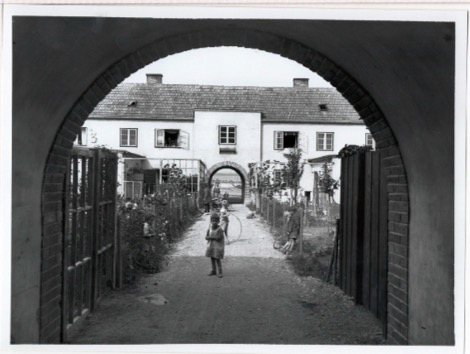
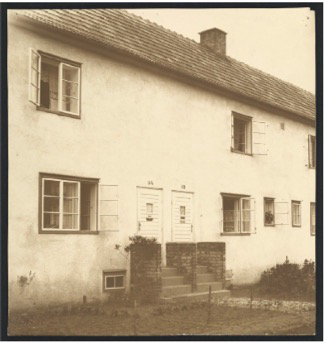
broader programme of social reform. Rebekka Hirschberg’s recent case study 100 Years of Cost
Rent on the cooperative Neustraßäcker settlement provides a concrete context in which these
questions can be explored. Drawing on Giovanni Levi’s microhistorical perspective, the workshop
moves between the specific history of one settlement and broader questions of social housing,
architectural modernism, collective life, and changing forms of inhabitation. As Levi writes, “The
unifying principle of all microhistorical research is the belief that microscopic observation will
reveal factors previously unobserved” (Levi 1991).
Methodological Tools
Rebekka Hirschberg will introduce research practices developed through her work on
Neustraßäcker, including participant observation, walking, journaling, interviews with
residents, and archival material as a conversational artefact. Participants will explore how a
walk through a housing settlement can become a form of observation and documentation, and how
archival photographs, plans, or documents can activate memories and initiate conversations with
residents.
Walking will be approached as a research tool informed by the work of Tim Ingold and Michel de
Certeau. Rather than treating a walk as a simple site visit, participants will experiment with
observing movement, spatial relationships, everyday routines, encounters, and forms of
appropriation. Journaling will complement these observations by encouraging participants to reflect
on their own position, perception, and bodily experience of the site.
Veronika Eberhart will introduce narrative interviewing, drawing on the sociological work of
Gabriele Rosenthal. In short group-based exercises, participants will practice formulating open
questions, listening without prematurely directing a conversation, and allowing narratives to unfold.
The focus will be on conversations that begin with an open research interest rather than a closed
hypothesis, and on how unexpected memories and associations can become relevant forms of
architectural knowledge.
The workshop will also introduce listening as a research practice, drawing on Pauline
Oliveros’ Deep Listening and approaches from sensory ethnography. Through collective listening
exercises, participants will attend to the acoustic and sensory dimensions of the built environment,
including ambient sounds, rhythms, silences, voices, and bodily responses to space.
By combining these tools, the workshop moves between different scales and forms of knowledge:
from the individual body and personal memory to the collective history of housing. A walk can
become an interview; an archival photograph can become a prompt for memory; a sound can trigger
a spatial recollection; and an individual story can open onto a broader social and architectural
history.
The workshop invites participants to reflect on how methodological choices shape what becomes
visible, audible, and knowable in architectural research, and how situated and embodied tools can
expand the ways in which architecture is studied.
Bios
Rebekka Hirschberg is an architect and housing researcher based in Vienna and Ghent.
She studied architecture at TU Graz, ENSAP Lille, and the Chinese University of Hong Kong, and
holds a MAS in History and Theory of Architecture from ETH Zurich. In 2018, she co-founded
wohnlabor (www.wohnlabor.at), an independent research collective exploring and contributing to
the discourse on housing, policies, and urban development in Austria.
Rebekka has worked in architecture offices in Graz and Zurich and as a research assistant at the
University of Hong Kong and ETH Zurich. Between 2020 and 2024, she was part of the research
project Cooperative Conditions: A Primer on Architecture, Finance, and Regulation in Zurich on
cooperative housing in Zurich, initiated at ETH Zurich by Anne Kockelkorn and Susanne Schindler.
The project was presented at the 2021 Venice Architecture Biennale and published in 2024 by gta
Verlag.
Since 2023, Rebekka has been a PhD candidate in the Department of Architecture and Urban
Planning at Ghent University, working with Anne Kockelkorn. Her research focuses on the
intersections of architecture, cooperative housing, models of financing, and urban planning.
Veronika Eberhart is an artist, musician, and researcher. She studied Art at the University of
Applied Arts Vienna and Sociology in Vienna and Copenhagen. She has further training in somatic
practice and Deep Listening.
Working across sculpture, text, sound, and moving image, her practice engages with questions of
class, labour, materiality, and their social and political structures. Her interdisciplinary research
combines artistic and embodied forms of knowledge, with a particular interest in material culture,
social histories, and systems of labour.Her work has been presented at institutions including
KIOSK, Ghent, IKOB – Museum of Contemporary Art, Kunsthalle Wien, Kunsthalle Graz, HKW
Berlin, and the MAK Center for Art and Architecture, Los Angeles. Her solo exhibition Alles pelt
zich at KIOSK brought together sculpture and elements derived from woodworking tools and
processes. Her latest publication, Garten sprengen, was published by Spector Books.
Practicalities
For whom?
- PhD students and postdocs
- The number of participants is limited to 10
When and where?
- The lecture will take place on November 03, 2026 - 13:00-17:00
- Kapittelzaal H2/1.04
Registration?
- xxx